Opioids

When it comes to taking opioids, the United States has the dubious honour of leading the world. For every one million Americans, almost 50,000 doses of opioids are taken every day. That’s four times the rate in the UK. Take too many and you have a problem, and America certainly has a problem. The number of opioid prescriptions has fallen by 18% from its peak in 2010, but the total is still three times higher than in 1999.

Nationally, opioids killed more than 33,000 people in 2015, according to the Centers for Disease Control and Prevention. That figure includes deaths from heroin, an illegal opioid. But almost half involved a prescription opioid – that is, a painkiller available from a pharmacy with a note from a doctor.

So why does America – more than any country in the world – have an opioid problem? There is more than one cause, but one issue is that American doctors prescribe – a lot. Most insurance, especially for poor people, won’t pay for anything but a pill. Often the best thing is physical therapy, but no one will pay for that, and in any case it often needs prior long-winded pre-authorisation (for bureaucracy and procrastination healthcare insurers beat the Federal government). So doctors write a prescription.

Then there is the incessant advertising for drugs on TV, which use medical gobbledegook and are seldom explained. What they want you to focus on are the beautiful, healthy “patients” gambolling on stunning Caribbean beaches, better, presumably, for having taken the unpronounceable drug.

The US and New Zealand are the only countries that allow prescription drugs to be advertised on television. Pharmaceutical company spending in the US reached $6.4 billion in 2016 – a rise of 64% since 2012. None of the 10 most-advertised brands in 2016 was an opioid, but mass-marketing of drugs has accustomed the public to a plethors of advertised drugs that collectively promise to cure almost everything. In 2015, the American Medical Association called for a ban on adverts for prescription drugs, but they were not going to prevail against Big Pharma, whose only nod towards medical safety seems to be to include in every ad a warning “not to take the drug if you are allergic to it “. Well, yes!

It is cheaper to order American-made harmceuticals from Canada, but Big Pharma hit that idea out of the stadium. Oh, and I haven’t even mentioned the breathtaking profiteering of some pharmceutical companies with effective monopolies.

Irreparable damage

Recently Theresa May strongly rejected the idea of holding a second Brexit referendum. Calls for such a vote have been growing among MPs, who claim it’s the only way of breaking the parliamentary deadlock. But May, who survived a Tory leadership challenge, insisted that another referendum would do “irreparable damage to the integrity of our politics”.

What does she mean: “‘would do’ irreparable damage to the integrity of our politics”? “Would do? The irreparable damage is already done! The political class has shown themselves to be incompetent, unable to analyse the problems associated with leaving the EU, to take a measured view of what could and could not be done, or to devise a strategy on exit from the EU membership without wrecking the relationship with Britain’s biggest trading partners, and undermining the way of life, prosperity and security of the people who elected them. The problem in the UK is the same as in the US – the politicians don’t actually initiate ideas or make the decisions any more; they are ciphers. It is the donors who tell them what to do, but on this issue the rich backers of Brexit are as ignorant and incapable of homework as the politicians.

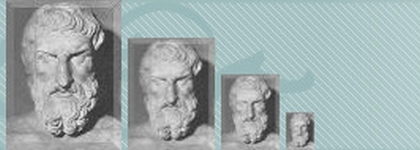
Brexit was always going to be immoderate in the hands of the extreme right wing of what is inaccurately and euphemistally called the “Conservative” Party. Brexit, for sure, is very far from being a conservative idea. It is certainly an un-Epicurean one.

Something really useful: How to save your battery’s life

In a healthy battery, ions flow freely between the anode and the cathode, and back again. Batteries degrade mainly because the surfaces of these electrodes become encrusted with oxidised electrolyte, and because other “parasitic” reactions follow on from that. Apple says that the lithium-ion batteries in its iPhones lose about 20% of their capacity after 500 charge cycles; most manufacturers rate their devices at about 300-500 cycles. Every time you recharge your laptop, you shave a few seconds off its battery life.

Many of us have the idea that it’s better to charge your phone all the way up, and then to use it until the battery’s nearly dead. This is quite wrong. Lithium-ion batteries don’t need to be fully charged; in fact, a high voltage stresses the battery. Most of the time, you’re better off charging it to 80% and then plugging it in again if it gets below 50%. Don’t let it drop to zero, and only charge it to 100% once a month or so. Leaving it to charge overnight is also bad. It keeps the battery in a high-tension state, wearing down the chemistry within. Batteries hate high temperatures, so don’t leave your phone in the sun, or your laptop on a bed with its cooling vents blocked. And if you’re not going to use a device for a bit, try to leave it charged to about 50%.
(The Week 15 December 2018)

A take on committees

Some people love a good committee,
And revel in its nitty-gritty:
Arcane debates on last year’s failings,
The contents of circulars and mailings;
The annual dinner, drink and eats;
Optimization of receipts.

Chairpersons, regardless of their gender
Like to set their own agenda.
This, their most important role,
Gives them what they want – control.
They’re happy to keep debate in play,
Provided they have the final say.

Others hold forth, expound, expand
On the minor stuff they understand – –
Like weather, beds and movie stars
And email spam and parking cars.
With substance they’re inclined to freeze,
More often they are absentees.

Then there are those, about a third,
Who, if they have views, are seldom heard.
They arrive, they sit, look lost in thought,
But are they thinking, as what they ought?
As supernumeraries they shirk,
Avoiding tasks and paperwork.

Meanwhile, some champing at the bit,
Are pondering if they should quit.
They are not there for social fun,
But simply, yes, to get things done.
They move, they shake, their presence fleeting,
And off they flash to their next meeting.

Their exit quickly ends debate.
The chairman asks about the date
(making the remaining members fidget)
Of a meeting to discuss the budget.
Members naturally avoid the rigors
Of digesting all those boring figures.

Thus they progress much like a snail.
Faced with demands, most people bail,
Leaving achievement satisfaction
To that rarity, the man of action.

Comment: I have never joined a committee that I didn’t want to resign from.