Our leaders with feet of clay

Tony Blair must be the most reviled politicians in the UK. He has amassed a personal fortune since standing down as prime minister – often acting as an adviser to controversial businesses and regimes, while notionally trying to sort out the Israeli-Palestinian conflict (achieving zero). He signed a secret contract with a Saudi oil company for £41,000 a month and 2 per cent commission on any of the multi-million pound deals he helped broker, stipulating that the details should be secret. He made another large (undisclosed) sum advising Kazakhstan’s autocratic president, Nursultan Nazarbayev, on how to manage his image after the slaughter of 14 unarmed civilians. He is reported to have a property portfolio of 31 homes worth at least £25 million and to charge £150,000 a speech, in addition to a deal advising investment bank JP Morgan and Swiss insurer Zurich International. All this cloaked by a charity whose finances and activities are not clear.

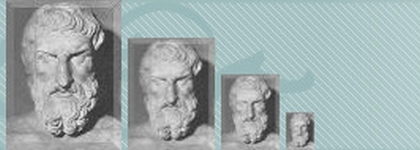
Blair is not alone. The Clintons are under fire for profiting rather too obviously from their former advantagious position. The former President of Yemen, a pitifully poor country, salted away billions during his term in office and is reported to be the man funding the Huthi rebellion at present. And so it goes on. This is why Epicurus advised us to have nothing to do with politicians. It wasn’t always so crudely self-interested and obvious. Can you imagine Disraeli and Gladstone filling their pockets in massive conflicts of interest and greed? These were people who believed in public service.

Are Christians more healthy than non- religious people?

An article in the Daily Telegraph in Britain, written by Sean Thomas, listed some of the reports that link religious belief with health: in 2006, researchers at the University of Texas (it would be, wouldn’t it?) found that the more often people went to church, the longer they tended to live; a Duke University study found churchgoers tend to have lower blood pressure and stronger immune systems. Other recent studies show that believers recover faster from surgery than their “heathen peers”, and have better outcomes from breast cancer and coronary disease, even after adjusting for the fact that they tend to smoke and drink less, and take fewer drugs. They enjoy better mental health, too, as a UCLA study of college students has found. Mr. Thomas ended with a clincher: believers give more to charity than atheists, “who, according to the very latest survey, are the meanest of all”. (reported in The Week).

I think writer misses the point. The point is to avoid mindless consumerism and have something in your life of consuming interest, something that exercises your mind, allows you to keep learning, that gives you feelings of pleasure, excitement and achievment. An objective, a mission in life, these also lower the blood pressure and the stress and strengthen the immune system. Speaking personally, I love creating things: a piece of music that works, a successful drawing, a poem. The lasting pleasure is enhanced if my wife looks at what I’ve done and exclaims, “I love it!”.

But this is only one person’s take. I can see that believing in a physical heaven with angels, where you are reunited with your loved ones, could be a great comfort in this life, even if one wouldn’t necessarily want bet ones last penny on it actually happening. Even devotion to astrology or a Druid cult is better than endless television. Corporations want us to be devoted to spending, a particularly stupid preoccupation in life. As for not being generous and charitable, what the article doesn’t say is that increasingly non-believers are young and have less disposable cash to give to charity. But their wish to help the poor and disadvantaged is undoubted.

The purchase of elections

The British election may have been boring and the electorate unimpressed and unengaged, but at least it was short and was not overwhelmed by cash from dubious sources.

Hillary Clinton’s base wants a Constitutional Amendment that defines a person as a human being, not a corporation or a faceless SuperPac. This is not going to happen anytime soon, thanks to money-dependent politicians and a politicized Supreme Court. Hillary says she wants to overturn the disastrous Citizens United decision of the Supreme Court, but her so far tepid support shows that she has little credibility on the subject.

The name of a game of cards where all the best cards are in the hands of one per-cent of the players is “Oligarchy”, and Epicureans believe that it is hard for the majority to win such a game. Hillary would feel as uncomfortable in the garden of Epicurus as her competitors. There, there was an equal say for everyone, regardless of affluence and access to “pay-to-play” cash.

Religion

“Our dream dashes itself against the great mystery like a wasp against a window pane.  Less merciful than man, God never opens the window”. (Jules Renard, Journal 1906)

Poetry. Gone the way of modern music and fine art?

The magazine, “Oxford Today”, recently ran an article criticizing modern poetry. It says, to summarize the argument, that too much modern blank verse is linguistically poverty-stricken and difficult to understand, sometimes incomprehensible. There are too many modern poets who are trying to excorcise the demons of their youth – at tedious length and in narcisistic fashion, showing themselves to be wrapped up in their own angst. The author says that poetry should be written so that it can be spoken out loud, and that every word and image should resonate with the audience (note: not declaimed in monotone, but spoken. Ed.). He mourns the loss of the rhyme. Rhyming makes the poet employ imagination, creativity and discipline of mind. In short, although he doesn’t use the words “sloppy” or “unprofessional”, the inference is that too many poets (not all,of course) get away with offering strings of glorious words, signifying nothing.

This is what wrote several years ago on the subject of rhyming and verse:

The Rhyme

Poets now despise the rhyme,
Or that’s the affectation.
But nonsense is as nonsense does
And what is worse than bad blank verse? –
Gibberish strung upon a line,
Conforming to the fashion?
The wish being father to the thought,
It’s promptly
Found
To be
Profound.

Rhymes outdated? That’s just rot!
Some can rhyme, and some can not.

It’s content, not the form, that counts,
And mastery of meaning.
A certain discipline of mind
Is requisite when using rhyme.
So don’t reject the tools at hand,
Misused as they may be.
The means can justify the end.
My point is penned.
Enough!
The End!