A message from Medecins sans Frontieres

“On Saturday, October 3 MSF’s trauma hospital in Kunduz, Afghanistan—where we have been working for four years—was repeatedly hit by direct, focused, and sustained air strikes.

“Any deliberately targeted attack on civilians and protected structures during war is a violation of International Humanitarian Law and can constitute a war crime. MSF’s public statements about this incident have no political aim. We are defending our rights as an impartial and independent emergency medical aid organization, and seeking accountability for a clear violation of the very laws that make our work possible.

“In order for MSF to deliver lifesaving medical treatment to patients in conflict zones who otherwise have no access to healthcare, we require that all warring parties respect the Geneva Conventions and other international laws that forbid targeting medical facilities and staff.

“The attacks on the Kunduz Trauma Center lasted for more than one hour, and continued for 30 minutes after desperate calls from MSF team members to both Afghan and Coalition forces asking them to stop bombing the hospital.

“The attack on the MSF hospital in Kunduz was the biggest loss of life for our organization in an airstrike. Our patients burned in their beds. MSF doctors, nurses and other staff were killed as they worked. Our colleagues had to operate on each other. One of our doctors died on an improvised operating table – an office desk – while his colleagues tried to save his life. ”  (Lightly edited)

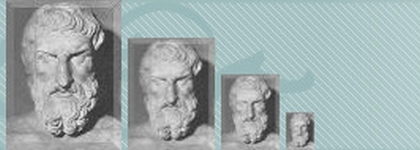
How could such a thing happen, given the huge financial outlay on “intelligence” on the part of the United States?  Yes, at least an apology has been made, but it highlights the futility of the Afghan war and the incompetence of those who have run it.  Whether it is Iraq, Libya or Afghanistan the military and the intelligence services have underlined the inappropriateness of foreign adventures.  Epicurus was right about foreign wars.

(The writer is a donor to MSF, one of the most effective non-profits in the world).

What if you fail? Does it matter?

“The question “what if I fail?” is one of the most frequently typed into the Google search engine. So how can we answer it?  The only real answer is that we have to cultivate wisdom, and to do that, we need to make space for quiet study.  That anyway was the view of Aristotle (and Epicurus. Ed. ). Like most of the Greek philosophers he believed that the answer to life was to ” know thyself”; in other words, not to push yourself in the wrong direction, or to chase money or fame.  He said that the life of a merchant was full of worry, and that the glories of a political life were fleeting.  The happy life was the contemplative life.  If you can read books and enjoy doing nothing, you can always be happy………

“Failure is polite. To be imperfect is an act of courtesy to your fellow human beings.  In the same way to be hugely successful is rude because it excites envy and jealousy in others. …It helps to understand that advertisers deliberately appeal to our sense of failure in order to sell stuff”.  (Tom Hodgkinson, Guardian Weekly, 2-8 Oct. 2015).

So don’t be beguiled by the “personalities”, the young and sudden millionaires and all- too- beautiful models and their expensive clothes. It’s all flim- flam, here today, gone tomorrow, drowned (quite frequently) in alcohol and drugs. My mother, a successful and beautiful model in her youth, once told me, “Ignore those glamorous people – at the end of the day there is nothing there.”  Failure, on the other hand, makes you a stronger and wiser person.  We all fail at something.

The blinkered supporters of laisser-faire child bearing

The religious right, in full cry against Planned Parenthood and family planning talk a lot about the sanctity of life but close their eyes to the implications. It is estimated that the population of the planet will reach over 11 billion people by the end of the century.  Add the  effects of global warming and it is very possible (no, not inevitable) that we can look forward to war, lack of food and water, insufficient jobs and mass migration. The Middle East is exhibit Number One. Is this what God has planned for the human race?  No, I don’t think so.  Or, if it is, what sort of a god is she?

Epicureans are natural feminists as well as humanists.  They think of the poor, under-served women, and the unwanted, unloved children of the world, often the result of rape.   They stand for love and a decent upbringing and education for all children, brought into the world in a spirit of moderation. They want action on global warming so that as many people as possible in the future have fulfilling, contented lives, jobs and an education.   The (mostly) religious people who oppose family planning should reverse the pre-historic and perverse teaching of religion that encourages the faithful to “go forth and multiply”.  Badly out of date, that.  If a god of love exists then she is quite capable of spotting that one of her planets has enough human beings on it, and that too many spell disaster.  Are the religious right working against the very will and intention of their creator? Quite a thought.


Some encouraging news about bogus drugs

Counterfeit drugs account for roughly $75 billion of the $900 billion global pharmaceutical market — and about 100,000 deaths a year in Africa alone. In Kenya, up to 30 percent of drugs on the market are counterfeit, according to the World Health Organization.  Many “drugs” are no more than just chalk or water.

Muhammad Zaman, a biomedical engineer at Boston University, has designed a suitcase that detects fake drugs. Called PharmaChk the device is about the size of a carry-on bag. When you open it up and pop a pill into the designated spot, it measures the potency of the drug.

If you want to test a malaria drug (a pill, powder or a solution) you  mix the drug with plain water and combine it with a second solution using a fluorescent probe that comes with the kit. The  probe is designed to bind active ingredients in malaria drugs. When there’s a reaction between the probe and the drug, there is light. The light that comes out is directly proportional to the amount of active ingredients in) the drug.  If you are dealing with a drug that is completely fake, there is no light and no active ingredient in the drug.  The process takes 15 minutes.

Amid some depressing news in the world, nuggets like this are cheering.

Is Powerpoint pointless?

Some years ago I was a business consultant, specializing in small hi- tech companies, mainly.  Such companies wanted your report in easily digested sound-bights.  So you tried to get your points over to them using flip pads, with headlines and simple sentences that were digestible and  might be remembered.  At some point I realised that it wasn’t an effective method of persuasion.  And now we have PowerPoint, complete with bells and whistles.

PowerPoint is  bad news.  When I was at university nobody ever used flip pads, let alone flashy electronic aids.   The lecturer or tutor held forth and you made frantic notes. Later, you returned to your digs and tried to digest what you had heard.  What were the main points? What can I take from this and use in an essay?  Where does all this fit in in the grand scheme of  (say, European history). It was mind training, sorting out from an incoherent jumble some nuggets of gold.  Now the main points are chosen by the lecturer, who hands out copies at the end of the lecture.  He should not be surprised if the resulting essays are variations on the same theme, maybe using some of his exact words.  It may be convenient to students, or, indeed, businessmen listening to a consultant, but it trivializes what were intended to be subtle points.  According to Andrew Smith  in the Guardian Weekly, (o2. 10. 15) students demand PowerPoint.  Were I in charge I would tell them, ” Listening to my lecture is part of your education; crib sheets are not”.