A bigger picture: no. 2

After I posted yesterday’s piece about the Battle of the Somme I came across, by accident, the following letter to The Guardian, which expresses my feelings as a historian rather better than ever I could manage myself.   It reminds the reader what the EU was originally designed to achieve:

“In my lifetime I have seen world population increase threefold; a stable seasonal climate become wildly unstable with drought, forest fires and floods; the pollution by humanity of the planet’s earth, air and waters to a stage where all life is threatened; and violence become a permanent, continuous tragedy in a world of great uncertainty. The only stable community in this universal upheaval has been the European Union, formed from the wreckage of a continent for which I and millions of others fought six years of war.

“I write as a former airman, having flown well over 2,000 hours against three despotic enemy nations. That victory for the democracies has given Europe 70 years of peace and security in a widely unstable world. The Leave chancers are campaigning to abandon this steady progress, citing values false or irrelevant, while they have no plan of what to do after jumping ship. If the nation should fall for this deceit, I can only conclude the lives of my comrades – Irish, Scots, Welsh and English – were lost in vain. They will be rattling their bones, wherever in the world they fell, at the loss of the beliefs for which they fought. Britain in Europe will enhance progress to higher values in the greater world; Britain out means a return to the early 20th century chaos of warring states against each other.
I am 96. I remember how far we have come. I know what we stand to lose.”
Franklin Medhurst, DFC (RAF 1939-46), Carlton, County Durham

A bigger picture

Yesterday was the centenary of the beginning of the Battle of the Somme in 1916.  One million men were killed in that gruesome battle alone.  One of the principle reasons for the creation of the EU and its predecessors, after all the slaughter, the cruelty and the wasted resources, human and material, in the 20th Century, was to avoid this type of obscenity – ever again.

One hundred years later we are contemplating the weakening,  if not the possible destruction, of the EU, and the distinct possibility of a return to petty competitive nationalism. After 1945 the counterweight of Britain and France to a resurgent Germany was regarded as essential, and this idea was supported by enlightened Germans.  Now Germany will have its little (actually, not so little) commercial empire.  The German pressure to expand eastwards and to include countries like Roumania, Bulgaria, and even Turkey, in the EU is wholly inappropriate and naturally upsets Russia.  No one in Western Europe except some German manufacturers and bankers will benefit. Britain is “absent without leave”.

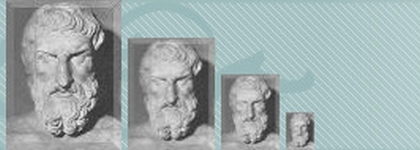
In short, the British media and the politicians don’t understand what they have done – their attention is fixed on immigration, rules from Brussels, being bossed by foreigners and so on.  The really serious potential problems are waiting, as it were, in the lists, and will be aggravated by movements of populations and climate change.  Instead of facing these challenges together we will be doing so apart. All the product of short- termism, “little Englandism” and little knowledge of history.  Epicurus believed in cooperation and mutual support; so should we.

Are emails on the way out?

Emails revolutionised working life, providing an instant way to communicate without picking up the phone. “Then everyone started using them”, and they became the bane of our lives.  Last year, some 74 trillion missives were sent – the equivalent of 2.4 million a second: “many are unsolicited and pointless” but, since we are “a polite and sociable species”, they still get read. The upshot is that we are each spending, on average, the equivalent of 36 days a year on them. “Doing emails is often work avoidance or, at best, work interruption” – and time spent emptying inboxes costs money and drives down productivity.

No wonder companies are fighting back. Volkswagen closes down its email servers at 5.30pm. Atos, a French IT company, is on track to ban email and replace it with internal social networks. Now the Halton Housing Trust in Cheshire – after discovering that staff were spending 40% of their time on internal emails – has decided to make the phone its default mode of communication. “It’s good to talk”. (Editorial in The Times, London).

Sometimes one wonders how people find your email address.  I totally concur with the drift of the editorial.  Because it costs little or nothing to send emails they have become a burden, eating into our precious time.   One (otherwise excellent ) non-profit sends me two emails a day;  Bernie was doing likewise.  In the end you zap the emails un-read.  On the other hand, if we are all required to buy $500 mobile phones to communicate with the world, I shall despair. I drew a line in the sand – that is, I have an i- pad, and decided to have no  other additional i- product.  I suppose I will be regarded as a museum piece. Eventually it happens to all us beached whales.

Is LinkedIn worth celebrating?

“The “intensity of mockery” heaped on LinkedIn following the announcement of its $26bn sale to Microsoft makes me actually want to pity the world’s largest professional network.  “LinkedIn is Facebook for ugly people”, tweeted one wag in a typically jaundiced pronouncement. But I have finally learnt “if not to love, then at least to appreciate”, the “galaxy’s most annoying social network”.

“LinkedIn is “a useful database” for professional contacts, and a good alternative to the traditional CV. Admittedly, much of what is written is “twaddle” and often “takes the form of people mindlessly endorsing people they don’t really know for skills they don’t really have”. But with its mixture of random congratulations for “work anniversaries”, inspirational quotes and “interesting” links to deadly dull executive blogs, LinkedIn does one thing very well: it perfectly captures “the spirit of the modern office”. In a world where every social network is trying to be “fun and original”, LinkedIn’s authentic brand of corporate ennui is almost “charming”.  (Sathnam Sanghera, The Times),

I don’t quite understand why LinkedIn is being mocked.  I am no longer in the market for a job, and have no interest in networking to get one, keep one, or find out about people I am about to encounter at a meeting.   But I do get regular emails from LinkedIn, featuring the particulars of my friends and acquaintances who are still working, and it seems to me to be useful.    It provides the backgrounds  of those you are doing business with, or contemplating doing business with.  You have to approach the particulars with a healthy dose of scepticism – no one goes online like this intentionally posing as a shrinking violet. But it is an indication of character, ambition, even plain honesty (I searched for one previous business associate and was amused at the blatant exaggeration and creative imagination used to promote his expertise).  But read between the lines and it is a useful business tool.

The increasing pace and stress of life

“In the midst of such overwhelming existential change, the pace of our daily lives will continue to increase as our world continues to shrink. Fear and anxiety are natural reactions, yet no one in the political realm acknowledges this”. (Kathleen Parker, Washington Post, March 2016).

Speaking as an older person I can second her concern.   My wife and I were recently subject to card fraud in New Jersey, while physically being nowhere near New Jersey.  Last week we were pic-pocketed in a foreign country, losing two credit cards and a lot of cash.  That’s three credit cards stolen within the space of a month, and a good deal of fear and anxiety.   The banks have been helpful and correct, but we spent a morning in a foreign police station reporting the crime, spent an hour at least on the phone to the banks reporting the incidents, accompanied by the usual interminable waiting time.  Each time we have had to update our card particulars with a variety of companies.  Netflix, for instance, insist on verifying new particulars by sending an SMS message that you have to enter into a box on- screen and press “return”.  O.K, but an SMS message is useless to me –  I  have no mobile phone.  More  hassle.

All sorted out now and safely at home, but what a massive waste of time!  Time is our most precious commodity, more precious than the credit cards and the cash.  Stress and anxiety are foreign, I’m sure, to cool dudes in their twenties, but what it means to me is less time for creativity, enjoying life and, if it comes to that, this very blog.  And for what?

Epicurus was smart.  The politics of his time were equally turbulent, but the speed of life was the speed of normal human beings – or donkeys, if you prefer.  If you paid, you paid with a good old silver Drachma, a name that derives from the Greek verb meaning “to grasp”.  It’s original value was equivalent to that of a handful of arrows.  Ah, simplicity.