Hepatitis C and the $1000 pill

130 million people round the world have hepatitis C. The disease is best treated by a direct-acting antiviral drug called sofosbuvir, sold by a company called Gilead. Gilead introduced this drug onto the US market at the astonishing price of $84,000 for 12 weeks course of treatment.  Since the drug has to be used in combination with another antiviral medicine,the total cost is even higher. It would cost $226 billion, at this rate to treat the 2.7 million sufferers in the US alone. According to Medecins sans Frontieres, peer-reviewed estimates indicate a manufacturing price of $1.20 per pill.

Since pharmaceutical companies are not required to publicize the true cost of drug development it’s hard to know what it is in this case, but economist Jeffery Sachs estimates it to be as low as $300 million.  Moreover, part of the research cost was paid for by Emory University, supported by government grants. Gilead says that the high price takes into account the amount of money saved by obviating the need for future treatments, including liver transplants and hospital stays.  They say the pill saves money, because other procedures are unnecessary.  

It’s possible to charge $1000 a pill owing to the fact that the US allows monopolists to charge what they like and also to the lack of a single-payer system, which allows a powerful buyer to bargain. The US Congress specifically forbids such bargaining (value of the reward for this to Republican Party fundraisers unknown, but assumed to be significant). The worst sufferers are the poor and developing countries. These get a discount, but the price is still beyond their ability to pay. (facts reported by Doctors without Borders).  

This outrageous situation is called “liberty” by some, the “free market” by others. Why not “exploitative blackmail”?

A dangerous glorification of failure

Some while ago, the chief executive of UBS told bankers there that henceforth “it was OK for them to make mistakes”. A culture in which everyone was petrified of taking risks, Sergio Ermotti said, wasn’t in the interest of the bank or its clients. “How mature, came the response. How refreshing to hear a bank chief acknowledge that risks need to be taken and honest mistakes will sometimes be made.” But mistakes are never OK – and “they are particularly un-OK in banking”. This nonsense is an export from Silicon Valley, where “fail fast and fail often” is what passes for wisdom. “Errors have been elevated to such a level that to get something wrong” is seen “as more admirable than getting it right”. This “glorification of failure” is based on two psychological misapprehensions: that we learn from our mistakes, and that the fear of making them paralyses us. Both are untrue. Sometimes people must take risks, and sometimes things will go wrong. But it serves no one, least of all the individual concerned, to “make light of their disasters”.  (Lucy Kellaway, Financial Times).

Perhaps a little tough. It depends so much on context. If it’s just a mindless gamble with other people’s money, then that is an absolute no- no. But every businessman sometimes has to take a risk.

Faced with the appearance of the Apple Mac and the rapid decline of the drafting supply market, I took the risk of launching a French range of fine art products onto the market, choosing products that complemented those of the well-established market leader, Winsor & Newton, rather than compete item for item. I hired six salesmen. Success? Modest. Effort? Huge. Outcome: when the company was sold the new owner scrapped the initiative. I had underestimated the conservatism of the customers. But I had to try; just to give up and walk away would have been pathetic. The company now specializes in the educational supply market. That change, too, must have been a gamble, but then new owner had lots of money to make it.

The new British “government”

Wonderful news!  The highly intelligent new British Prime Minister  has corralled three of the most vocal and dangerous people safely in her Cabinet and made them responsible for Brexit. Since it is unlikely that the EU will agree to scrapping free movement of people and still allow Britain to trade freely with the EU, prime Minister May has cleverly set them up to fail and to discredit themselves.

It was clear that without doing this May would be out of office within two years.  Now she has made an which  they couldn’t refuse, and can sack them all whenever she deems them busted flushes.

Thus we will  have a hugely amusing time and have a chance of coming out in some sort of rational order.

Epicurean ethics

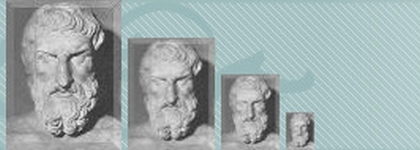
The following are ten basic ethical tenets of Epicureanism – how should we live? What is the goal of living? How should we pursue that goal?

1.  Don’t be concerned about “gods” –  supernatural beings do not exist, and even if there are any “perfect” higher beings they are not concerned with mankind.  The only way to dismiss superstition and fear from life is to live intelligently, and therefore confidently, and this requires that we study the world around us (and science) and employ the faculties of observation given us by Nature (the Epicurean Canon of Truth).

2. Pleasurable living is the ultimate goal of life set by nature. We can do this by filling our lives with good things, avoiding pain, studying nature and striving for safety and independence.  This implies avoiding people who are disagreeable and who cause you fear, anxiety or displeasure.

3. Even if you are not able to rid yourself of  all pain and anxiety,  pleasurable living is possible. Strong pain generally lasts a short time, and even of it lasts a long time, it is generally mild.  This implies that in difficult times one should try to be patient, for most bad things pass.

4. It is possible for us to attain the maximum pleasure if we pursue it intelligently.  This implies thinking, not just about yourself, but about the interests and pleasure of others as well.

5. No pleasure is bad in itself, but some pleasures bring more pain than the pleasure justifies. And no single pleasure should be pursued to the point where it consumes our lives, because if it did so there would never be any room for any other pleasures.  This implies moderation in all things.

6.  “Virtue” is simply the name we give to the necessary tools by which pleasurable living can be attained. It is not possible to live pleasurably without these tools, nor is it possible to employ these tools properly without living pleasurably.

7.  Men can live wisely and pursue pleasure intelligently because they are free agents and their actions are not wholly determined by outside force.

8.  If we live wisely we will see that our most important tool of happiness and security is friendship with people of like mind, attitude and loyalty.

9.  The only true foundation of Justice is mutually advantageous agreement among intelligent beings to neither do or receive harm from each other.  This implies putting the emphasis on compromise where necessary, peace of mind, and the avoidance of unnecessary antagonism and the stress it brings.

10.   While there is no such thing as absolute or universal justice or injustice, the justice we can enjoy is founded on mutually advantageous agreements.  This implies that relationships that change over time and become less mutually advantageous can be considered no longer just.


Good news: Incidence of diabetes in America is topping out

There has been a decline in new cases of diabetes in US adults at a time when most despaired of the relentless upward trend. According to the US Centers for Disease Control and Prevention, new cases fell from 1.7 million in 2008 to 1.4 million in 2014 – the first consistent drop since 1990, although there is still thought to be at least one undiagnosed case for each known one in the US.  This despite the migration into the US of people of Hispanic origin, who tend to have a higher risk of diabetes, with genetics suspected to play a role.

So what is behind the US trend? First, there have been changes in the way diabetes is diagnosed. The use of blood sugar levels is gradually being replaced by measuring glycated haemoglobin. (called the A1C blood test. It measures blood sugar levels over a three month period, not just that of the day of the test).

The most hopeful explanation for the trend is that public health messages aimed at tackling obesity and diabetes  are beginning to hit home. There is increased recognition that obesity has been driving the diabetes epidemic and  that prevention is possible through healthier eating and more exercise. If so, it would be a triumph for the government and the US public health movement, and would be a milestone in the prevention of a condition with huge personal and national costs.  (Adapted from an article in New Scientist by Paul Zimmet, professor at Monash University and director emeritus of Australia’s Baker IDI Heart & Diabetes Institute, Melbourne).

The relevance to Epicureanism is that diabetes is sucking up a disproportionate amount of money and resources, which could be spent on, for instance, cancer.  Where it is avoidable (by self- control, eating well and exercise) it is a test of self- discipline.