Are we alone?

The Space Telescope Science Institute suggests that there are currently 1020, or 100 billion billion, Earth-like planets in the universe, with an equivalent number of gas giants. “Earth-like” doesn’t mean an exact replica of our planet, but rather a rocky world that, if blanketed by a suitable atmosphere, would hold liquid water on its surface. Applied to the solar system, this definition would include Mars and Venus but not Mercury or the moon.

If we find just one other inhabited planet in the Milky Way, the number of other such worlds rockets up. Such a discovery, together with the unlikeliness of our galaxy being the only one to host life, would make Earth at least the 10 billionth civilisation in the universe at present. But the likelihood of any of them being identical to ours is almost zero. A change of just a millimetre in the initial conditions can result in a huge difference. Adding just one extra molecule to the early solar system could mean the Earth never formed.

Slightly counter-intuitively, the simulated solar systems end up looking quite similar, the exceptions being the simulations with no gas giants. These end up with around 11 rocky planets, most of which are less than half the mass of Earth. Add the gas giants and you get around four rocky planets ranging from half an Earth mass to a little more massive than Earth – a pretty good match for our own solar system.So even if that extra molecule had been floating about, the result wouldn’t have looked that different. “Something like Earth would probably have come up, and maybe something alive would have developed. But not us.

Don’t let this desolate randomness get you down, says Rebecca Martin of the University of Nevada, Las Vegas. “It’s exciting that we’re not special,” she says, because it means life is abundant in the universe and we can go looking for it. (adapted from an article in the New Scientist).

In this great and confusing mass of stars and planets how does God actually find us in order to encourage us, bless us and admonish us? Tomorrow I will tell you a story about this very subject. Come back and read it.

Killing the bees

Bees are dying in record numbers – and now the US government admits that an extremely common class of pesticide, called neonicotinoids (or neonics) are at least partially to blame. Neonics, of which there are five types, are marketed by European chemical giants Bayer, BASF and Sygenta.

Millions of acres of farmland are treated with neonics each year. The crops most likely to expose honeybees to harmful levels of imidacloprid, the worst type of neonic for bees, are cotton and citrus, while corn and leafy vegetables either do not produce nectar or have residues below the EPA identified level. However, corn and leafy vegetables get huge amounts of another neonic, clothianidin, whose EPA risk assessment hasn’t been released yet. Soybeans, attractive to bees, are also treated with dangerous levels of imidacloprid, but data on how much of the pesticide shows up in soybeans’ pollen and nectar are “unavailable.”

In addition to their impact on bees, neonic pesticides may also harm birds, butterflies, and water-borne invertebrates, recent studies suggest. Also, assessments of the other neonic products, that coat seeds and thereby kill other insects, have never been done.

The EU banned three of the bee-killers in May 2013, after a massive public campaign and a clear scientific finding from the European Food Safety Authority that neonics pose huge risks to bee populations. The current ban on bee-killing pesticides is up for review soon, but a EU report that could have banned dozens of pesticides has been buried — due to industry’s massive lobbying. The French parliament has meanwhile voted in favor of banning all neonics. Why can’t other countries do the same thing?

Bayer is an enormous company with many profitable brands. Neonics are a big part of its bottom line. As part of their answer to the threat posed by bans, Bayer and Monsanto are attempting to merge, creating a new corporate giant in the already consolidated market for seeds and agricultural chemicals, leaving farmers with fewer options and higher prices.

Monsanto is as bad as Bayer. Together Bayer they are wrecking our ecosystem and threatening a creature responsible for pollinating a third of all our crops, along with numerous others. Not only should the uncompetitive merger be stopped, but the company should be made to stop production Bees are at risk of global extinction. We have to show the multinationals that we won’t tolerate them putting their profits ahead of our planet’s health and our own.

Tomorrow: a related story that will make you very fed up indeed.

Why does Britain keep Gibraltar?

One of the sillier historical anomalies is the status of Gibraltar, ceded to Britain at the end of the War of the Spanish Succession under the terms of the Treaty of Utrecht of 1713. At that time Britain actually had a powerful fleet and could hope to dominate the Mediterranean. Gibraltar is still a strategic spot, but its importance to a Britain with just two aircraft carriers, and not much else, is small. In the time of Franco it might have been argued that Gibraltar was a safeguard in the event (unlikely after the devastating Spanish civil war) that Spain entered the war on the side of the Axis powers. But now Spain is integrated into the EU and its importance lies in the fact that it is concerned about both Gibraltar and Catalonian separatism, both of which inform its worldview. From the Spanish point of view anyone “leaving” anything cannot be tolerated.

What Britain should do is to offer Gibraltar in return for Spanish efforts to soften the term of Brexit. It would be worth it. It makes no sense to control a part of Spain from afar, even if the inhabitants want to remain British (something that can be fixed). Epicureanism is partly about not upsetting other people for no good reason. Let’s get along better with Spain. Britain needs all the friends it can get.

Are referendums a threat to democracy?

It often seems unfair that referendums are used to decide weighty questions of national policy, says Bruno S. Frey. We Swiss know all about this: we have a long history of big decisions made by tiny margins. Switzerland would be part of the European Economic Area had a proposal to join not been defeated in the 1992 referendum, by a margin of just 50.3% to 49.7%. In 2014, we voted to limit immigration – causing uproar in Brussels – by a similarly narrow margin. Last year, a controversial radio and television funding act squeaked through with a majority of just 50.1%. A similarly close result is currently causing political tension in Britain, which is planning a complete break with the EU – voted for by just 51.9% of its population. And in Colombia last week, a peace deal with the guerrilla group Farc was voted down by just 50.2%, a decision that could lead to renewed terrorist violence. No wonder that in these cases, the losers clamour for a new vote. (The Week, 15 October 2016, Bruno S. Frey, Neue Zürcher Zeitung (Zurich).

If we all had populations that were well-informed, educated and able to vote, not in a tribal manner or from the heart, but rationally, then I think referendums could be the last word in democracy. But we don’t live in Greek City States, where everyone knows each other and we don’t even teach civics. We collectively get our information from social media, which is roiling in lies and misrepresentations.

Moreover, Parliament is either sovereign or it is not. Referendums undermine parliamentary rule. But if you are to have referendums there should first, be a rule that insists on a minimum percentage of the population voting before a referendum is deemed constitutional. Secondly, the parliament should be able to review and reject any final settlement after negotiations – I am thinking here of Brexit. If something isn’t done, referendums will simply fuel a growing disillusion with democracy.

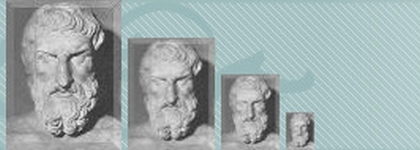
So, yes, I vote for Bruno S. Frey (above), and Epicurus, were he presented with the information we have, would probably have agreed.

The end of pandering to the super-rich

The American election and Brexit have illuminated one important point: “trickle down” economics have finally been exposed for the fraudulent nonsense it always was. The idea was that if you give the rich and the entrepreneurial their heads and allow them free rein to make money, their wealth will trickle down to mere mortals. Well, it doesn’t trickle down; it trickles out. The rebellions associated with Trump and Bernie in the US and the Leave voters in Britain show that the man in the street has seen nothing trickling down; on the contrary, society has become horribly unequal and has left millions with either no job or non-jobs, and little hope.

Right wing politicians loved trickle down. It was the ideology that “justified” the give-aways to corporations and the super-rich in return for election expenses and fancy jobs when they could no longer pull the wool over the eyes of their constituents. Now they are reaping the reward political whirlwind. Trump may not become President, but what he has been “articulating” is not going to go away.

Unless the establishment gets serious and addresses the general disaffection, especially in view of the automation of traditional jobs that is on the horizon – the instability will become very ugly. Already we have people who implicitly don’t mind if we have a dose of what used to be called fascism and autocracy. The establishment is under warning.

This is all a very long way away from the Epicurean ideal of moderation, tolerance and arranging things for the potential pleasure of all. It is alarming, but I think we have to have faith in the overall decency, good sense and moderation of the silent majority of decent people. What’s gone wrong can be put right.