Why do we still change our clocks in Autumn and Spring?

In the 19th century, the railroad connected people across distances so great that time zones needed to be implemented to align rail schedules. In the 20th century, the aeroplane eliminated all time zones, at least for pilots and airport personnel. Time is about coordination.

Some people think that daylight saving time (DST) nowadays does more harm than good. A state commission in Massachusetts has recommended that the state move its official time zone from Eastern to Atlantic Time and do away entirely with the back and forth of daylight saving. The move would give Massachusetts more daylight in the evenings – currently, winter sunsets start as early as 4.11 pm.

The original idea was to reduce energy use by providing more sunlight in the summer mornings. Savings in electricity costs and stress on the electric grid have been cited as reasons for changing clocks between summer and winter. But since energy demand actually peaks in the early afternoon in winter, longer evenings would actually reduce the need for artificial lighting. A 2008 report by the Department of Energy found that in 2005, when the US extended summer hours for a few more weeks into autumn, electricity use decreased by a small amount.

The Massachusetts commission, concerned about children waiting for school buses in the dark, also recommends delaying school start times, resulting in a better alignment with adolescent sleep patterns, driven by hormones. Later school start times also result in higher test scores and fewer teen car accidents.

If Massachusetts acts alone on this, it could cause a certain amount of chaos, so the commission recommends that the state should only make this move if a majority of other north-east states join in.

Seems sensible. But Steve Hanke, a professor of applied economics at Johns Hopkins University in Baltimore, suggests we use one universal 24-hour clock, followed by everyone on the globe. Pilots and stock exchanges use it already. This would mean that in some places, the sun would rise at, say, noon, instead of 7 am. It works in China, which has one official time zone for the entire country, despite covering five time zones geographically. Local custom dictates at which hour work begins and ends. Hanke thinks it’s only a matter of time before this practice is adopted globally, and our increasing reliance on technology may lead us there. (based on an article in New Scientist by Chelsea Whyte).

I’m not at all sure about one universal 24-hour clock, and what the advantage would be. Surely light, and the movement of the sun around the planet, has to be taken into account? I am writing this at 17.45 Eastern time,and it is dark outside. Being told that, after all, it is 13.45 would be a stretch for me at my age. I suppose one could get used to it, but I wonder how long it would take for 7 billion people? Could someone ”enlighten” me?

The end of liberal democracy and humanism? (Part 2)

Continued. from yesterday: Writer Huval Noah Harari sees three broad directions for humankind:

1. Humans will lose their economic and military usefulness, and the economic system will stop attaching much value to them.
2. The system will still find value in humans collectively but not in unique individuals.
3. The system will, however, find value in some unique individuals, “but these will be a new race of upgraded superhumans rather than the mass of the population”.

By “system”, he means the new kind of society that will evolve as bioscience and information technology progress at their current breakneck pace. As before, this society will be based on a deal between religion and science, but this time humanism will be displaced by what Harari calls “dataism” – a belief that the universe consists of data flows, and the value of any entity or phenomenon is determined by its contribution to data processing.

It is quite possible that massive and indigestible “Big Data” will eventually collapse under its own weight. But in two other areas, Harari is perceptive. The first is that our confident belief that we cannot be superseded by machines – because we have consciousness and they cannot have it – may be naive, because machine consciousness will be possible but because for Harari’s dystopia to arrive, we will need super-intelligent machines. and consciousness will not be necessary or required.

The second is the potential of bioscience. Even the Economist recently ran a cover story entitled: “Cheating death: the science that can extend your lifespan.” But the exciting new possibilities offered by genetic technology will be expensive and available only to elites. So the long century in which medicine had a “levelling up” effect on human populations, bringing good healthcare within the reach of most people, has come to an end. Even today, rich people live longer and healthier lives. In a couple of decades, that gap will widen into a chasm. (Part of an article by John Naughton, The Guardian, 28 August 2016, commenting on Yuval Noah Harari’s book, “Homo Deus: A Brief History of Tomorrow”.

My comment: Not a lot of this is new. Some years ago my wife and I were talking to someone from the OECD. He let slip that planning was afoot to create a giant “living bubble“ a massive dome under which elite, chosen human beings could live while climate change laid waste to the outside world, a world consumed with famine, mass migration and warfare. (Ihave to point out that, meeting him some years later he denied ever having said anything of the sort!) But maybe it is not so far-fetched. It can only happen when the mass of humanity have “lost their economic and military usefulness” and where a tech-savvy crowd of super- humans have arranged to live in safety, each for 150 years.

The end of liberal democracy and humanism? (Part 1)

According to Yuval Noah Harari, in his book “Homo Deus: A Brief History of Tomorrow” there is new challenge to liberal democracy. It’s primary roots lie not in ideology but in bioscience and information technology. He sugesrs that in the 21st Century “the train of progress is pulling out of the station – and this will probably be the last train ever to leave the station called Homo sapiens. Those who miss this train will never get a second chance. Those left behind face extinction. In order to get a seat on it, you need to understand 21st century technology, and in particular the powers of biotechnology and computer algorithms.”

“The main products of the 21st century will be bodies, brains and minds, and the gap between those who know how to engineer bodies and brains and those who do not will be wider than the gap between Dickens’s Britain and the Madhi’s Sudan. The defining features of the liberal democratic order is likely to be upended by the astonishing knowledge and tools that we have produced in the last half-century”.

For most of human history, Harari argues, humans believed in a cosmic order. Their world was ruled by omnipotent gods who exercised their power in capricious and incomprehensible ways. Then came science and, in some parts of the world at least, science has triumphed and belief in a transcendental order has been relegated to the sidelines. We have acquired powers that in pre-modern times were supposed to be possessed only by gods. With belief in god dying where will humans find meaning? “The modern world,” writes Harari, “promised us unprecedented power – and the promise has been kept. What about the price? In exchange for power, we are expected to give up on meaning of life”.

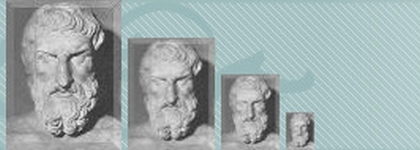
Humans are handling this at present by turning towards humanism (and its less dry and clinical version: modern Epicureanism, a belief that “sanctifies life, happiness, kindness and respect for others). Harari, however, argues that bioscience and information technology will ultimately destroy the foundations on which humanism is built. And since liberal democracy is constructed on the worship of humanist goals (“life, liberty and the pursuit of happiness” by citizens who are “created equal”), then the new technologies are going to tear liberal democracy apart.

How come? He says fhat the life sciences are undermining humanist individualism, suggesting that “the free individual is just a fictional tale concocted by an assembly of biochemical algorithms”. Likewise it is denying human free will. People may have freedom to choose between alternatives but the range of possibilies are increasingly determined by external algorithms as the “surveillance capitalism” practised by Google, Amazon etc becomes ubiquitous – to the point where internet companies will eventually know what your desires are before you do. ( A summary of a review by John Naughton, The Guardian, 28 August 2016).

My comment: Do you think human beings, once they understand what is being done to them, will tolerate being treated like ciphers? I don’t. These huge tech companies have to be put back where they belong – serving humanity. Because something can technically be done doesn’t mean that it is either necessary or wise. We have to fight back – these changes are harmful and unnecessary.

Tomorrow, in part 2, I will address what Hariri thinks will happen to human beings.

The people are parting company with the corporations

The disconnect between the people and the business community community has reached huge proportions in the US. Corporations are enjoying record profits but investing very little in the economy. Only one third of Americans believe large corporations are having a positive effect on the country and only 2 in 10 people surveyed say they have confidence in big business. The latter are in denial, thinking that if they explain their needs better people will come round. These needs include expanding international trade, immigration reform, reducing deficits, relaxing regulation, cutting corporate taxes and social programs like Social Security and Medicare.

(Interjection: What they think the whole point of life is is a mystery. Just making profits and allowing the bosses to run away with huge incomes?).

Meanwhile, the number of companies listed on the stock market has dropped by half from 1997 and 2012, and start-ups have not created nearly enough jobs to offset the losses caused from globalization. The troubles of business are magnified by social media,in terms both of outright criticism and also by plain lies and untruths that gain traction. There are no truth filters. Never before has business had such an image problem.

Much of the corporate agenda is stalled in Washington (except tax reduction). TTIP and TTP are both dead. Immigration reform looks a non-starter and much needed infrastructure repairs and improvements (which are plainly necessary) won’t get done because the Republicans will authorize no spending. Regulations are indeed being scrapped for the sake of business, although this may come back to bite them as safety standards drop. The stock market is doing well in the expectation of lower taxes and more profits.

(Interjection: regulations were there to protect the health, safety and welfare of the citizen. When the citizen finds he or she has no protection and is forbidden to sue corporations, the backlash will surely come, big time)

And now the Republicans are proposing to lower corporation tax substantially, on the bogus “principle” that it will act as a spur to commercial and industrial activity, and that the reduction in tax income will be more than paid for by the expected productivity and investment. The Republicans just tried that in Kansas, and as a result Kansas is bust. The idea has never worked and never will, if only because the business owners capture any benefits, if there are any.

Meanwhile, “top” businessmen are smarting at the comments of Trump and Sanders. Do we feel sorry for them? This is the beginning of the end for American business domination, excepting, perhaps, hi-tech – if China doesn’t out-perform it.

The best news sources

Despite significant advances in media and communication technology, high quality journalism remains something hard to come by. Newspaper revenues are in decline, caused by a shift to reading the news online. To make matters worse, many people choose to get their news via social media, eschewing the need to visit news websites at all. As a result, most people do not read high quality analysis. Both the internet and the printed newspapers are dominated by tabloids, who are notorious for sensationalising news, deliver poor quality and often superficial reports, and largely promote a right wing authoritarian worldview.

To combat this lamentable development, I’ve listed here some newspapers and magazines which I think are well worth reading. And if given the opportunity, I would recommend paying for your news as much as possible. If you are at university, speak to your librarian- your library may be subscribed to some newspapers already, allowing you to bypass paywalls.

In America, one of the best news websites is Vox.  I frequently quote Vox for all sorts of things. They get into the details of public policy; the subtle differences between Congressional healthcare plans or tax proposals for instance. They have a global outlook, coverings events like the Israeli-Palestinian conflict and Brexit thoroughly. They also produce some very informative videos. On YouTube, their video explaining the conflict between Iran and Saudi Arabia is fantastic. https://www.youtube.com/watch?v=veMFCFyOwFI. Vox is very progressive in its outlook, but they are very aware of the criticisms of their ideology. Like most American progressives, they’re very conscious of issues of identity (race, gender, class etc), but they’ve had writers like Mark Lilla argue that Democrats ought to be more unifying in their rhetoric. Overall I’d wholeheartedly recommend them.

The nearest thing Britain has to Vox is the New Statesman. Like its American cousin, its unabashedly progressive, but also has some dissenting writers. Its explanatory journalism is excellent. The New Statesman also has strong coverage of culture, with long sections dedicated to book and theatre reviews. But it isn’t as global as Vox; a sizeable majority of its articles are about events within the UK.

For great, balanced coverage of the whole world, The Economist is a great site. They are amongst the most global of news organisations, covering elections in every major country. Their articles are always interesting and thought-provoking. I also like the Economist’s relatively unique ideology- it’s liberal, pro-globalisation, but far more fiscally conservative than its main competitors. It’s articles are written anonymously, so it reads as if it could have been written by one person, particularly as all of its writers share roughly the same views. Thus, the Economist could be seen as a bit of an echo chamber, but none of its arguments are from ignorance or superstition.

A magazine I enjoy reading but shouldn’t be taken too seriously is the Spectator. It’s generally very conservative, but with some liberal writers as well. It’s articles are always provocative and well-argued. Like the New Statesman, it has excellent book, TV and theatre reviews. Having said that, some of it’s columns are complete nonsense- someone even recently argued that Britain crashing out of the EU without a deal would be a good thing. James Delingpole, a notable climate change denier, is a frequent contributor. Also, some of it’s writers are a bit prejudiced. Taki, who write the High Life column, seems to hold refugees and Muslims in contempt. He’s an ardent fan of Trump, and believes in a Jewish conspiracy to influence Washington, a bit like Pat Buchanan. Overall, the Spectator is very entertaining, and if you’re not a conservative, it’s a great way to have your views challenged. But if an absolute dedication to factual accuracy is what you’re after, you best look elsewhere.

I am more lukewarm about newspapers than the magazines mentioned above. I would recommend the Times and the Guardian in the UK, and the Washington Post and New York Times in America, for solid and up to date news and sports coverage. The Times and Washington Post are relatively balanced, with writers from both the right and left (though the Times is slightly more conservative.) The Guardian and New York Times are fairly left-wing, the Guardian especially so since the rise of Jeremy Corbyn. While they all offer relatively good information and analysis, I find they aren’t as informative and detailed as the magazines. They can be guilty of using clickbait to attract readers. The newspaper most guilty of this is the Independent, which often writes poor quality but controversial articles to get attention. These articles simply adhere to leftist dogma and notions of social justice, with no acknowledgement of an alternative perspective.

I’m afraid I can’t recommend any television channel in good conscience. All of them cover the news simplistically. Fox News is the worst offender, choosing the eschew the important developing story of the Trump administration’s links to Russia. Fox is a barrage of propaganda and hyperbole, which holds any dissenting view in complete contempt. It is also guilty of vile misogyny, frequently judging women by their appearance. It’s worth noting that Fox’s female presenters are considerably younger than the men.

Other television channels have the opposite problem. By adhering to strict impartiality, they cannot offer meaningful analysis of events. They simply list various points of view which are more eloquently explained elsewhere. They host debates between commentators which frequently descend into shouting matches, leaving the viewer with no idea of what the truth is. Other commentators will avoid questions (Kellyann Conway), or even lie. Impartiality can also allow mistruths to be presented as alternative opinions. The obvious example is climate change, which can be presented as a genuine debate when in reality, there is a consensus amongst scientists that climate change is caused primarily by human activity.

If you’re a busy person, radio can be a great way to get the news. You can listen to it while doing work or eating. Unlike its television wing, BBC radio is worth checking out. The World Service is still a strong as its ever been, and for British listeners (or anyone whose interested in British politics), Radio 4 is well worth a listen. Of course, the BBC’s impartiality limits the depth of its analysis. But unlike on television, there aren’t any shouting matches. Commentators have time to explain their views, and are also properly challenged for their views. In America, NPR does some very interesting programmes. I would avoid commercial radio though. Partly because much of your time will be wasted listening to adverts. But also because it isn’t as good quality. Talk radio in America is hopelessly right wing, with radio hosts spewing out conspiracy theories about the Clintons or Obama not being a real American.