Why not scrap elections entirely?

This is NOT a party political issue, but one that concerns the welfare and peace of mind of everyone:

David Van Reybrouck in his book, “Against Elections”, argues that there is a more democratic alternative to elections: random selection of people to political office.

Incredulous? Well, think about it. The current situation is not working. Young people, by and large, are not interested and many don’t vote. The rate of voting generally is pathetic, and only countries like Australia, which have compulsory voting, have respectable turnouts. I won’t discuss the details of how disfunctional the American system is because it is getting into the realm of party politics.

The British system is not much better. The make-up of parliament does not reflect the distribution of population, and despite the Boundaries Commission. Britain is an elected dictatorship, depending on the occasional internal party revolt to get rid of the prime minister.

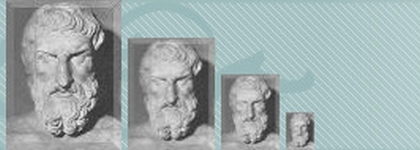
Given the caliber of Congressmen and Members of parliament in both countries, why not simply select ordinary people to political office totally at random? We couldn’t do much worse. In this way we would get a good cross-section of ages, genders, race, parts of the country, experience and careers). Gone would be the friends of friends, the people who turn up with personal agendas, the money in politics. There is even a possibility that the randomly chosen people would use their common sense, be pragmatic and be able to compromise to get things done.  Especially  they should address chronic inequality and money and gerrymandering in politics.  This idea is not only a sensible answer to our problems, but an Epicurean answer.

The ancient Athenians staffed their governments like this (although it didn’t stop them, disastrously, trying to establish an empire when they became successful). It seemed to work. But first we would have to do something about education, because the level of education is mind-blowingly awful, although most people don’t register the fact.

Why false news spreads fastest

False news travels much faster online than the truth – and it’s all because of our craving for novelty.

In the largest-ever study looking at how news spreads on social media, researchers at the Massachusetts Institute of Technology analysed 126,000 stories on Twitter from between 2006 and 2017. They found that false stories were 70% more likely to be retweeted than those that were true, and that true stories took six-times longer, on average, to reach an audience of 1,500 people.

One surprise was that automated robots – or bots – played no part in this discrepancy. “False news spreads more than the truth because humans, not robots, are more likely to spread it,” said the authors of the study, which was published in the journal Science. They concluded that the high visibility of false stories is not necessarily the result of malign intent: fake news may get shared more than the truth simply because people find it more surprising or intriguing than the truth. “False news is more novel, and people are more likely to share novel information,” said co-author Professor Sinan Aral. (The Week. 24 March 2018)

Let us all avoid social media, resign, close our accounts!  We can’t uninvent  these unnecessary time-gobblers, but if a significant part of the population boycotted them the facts, opinions and statistics that Facebook et al steal from us will become unrepresentative and thus unreliable.  Advertisers will spend less money based on Facebook data, the share price will fall  and maybe a more ethical company will take them over, with full government oversight that ensures the exclusion of Russians.

Newspapers and TV stations broadcast false news, not necessarily deliberately, it is true.  Something has to be done about them, too, like apologies in big typeface on front pages or flashed on screens. Epicurus might have been philosophical about all this – news must have been unreliable and subject to word-of-mouth distortion in his day, but he would have rejected the idea of the mass dissemination of lies on our modern scale.


The Wreck, a poem about day-dreaming

I sit gazing over the warm waters of Islamorada –
The seabirds, the distant lighthouse, the wind-surfers,
Kayakers, and jet-skiers skudding to and fro.
Islamorada is about relaxation, slowness
Extended time, warmth, sun and beauty.

What intrigues me is what seems to be a wreck,
Marooned on the outer edges of the reef.
From the beach it reminds me of the carcass of a
Giant Wildebeest on the Africa savannah,
Its gaunt ribs, bleached by the sun, pointing to the sky.

My imagination takes control. No, it must be old,
A large, wooden fishing boat, forlorn and abandoned.
What accounted for its demise, the summons of death?
Did a storm or a hurricane drive the boat ashore?

Is there some treacherous current out there?
Did the skipper, reveling in a good day’s fishing,
Take a lazy short-cut across a sandbar toward the jetty?
Were the crew celebrating the catch with one too many beers,
With the engine at full blast, the steersman inattentive.

As the boat grounds on the reef in a falling tide.
It stresses the keel and chines.
Chaos! Maybe broken planking in the hull?
Maybe water pouring in?
Broken glasses and whisky pouring from the bottle.
A sudden sobering up, a boat abandoned.

Or was it more sober, a simple mistake?
Perhaps a freshening gale and the need for a secure mooring
Led to a moment of distraction and impatience?
The water is shallow, no lives were at stake.

At worst the crew could reach land and struggle in
Through choppy waters, touching the weedy bottom.
Best get the boat straight to safety. A risk taken.
All at once the boat was so firmly lodged that
Nothing could refloat her.

That was a year ago and every day the sea claims
Another rib here or a grab-rail there,
As the fishing boat gradually disintegrates.

————————————————————

“The remains of that boat out there, offshore”, I ask.
“What is its story? Was there an accident or perhaps a storm?”
“A boat? There is no boat”, comes the reply. “Oh, that!
“That is no fishing boat; it is a
Tree,
Dislodged up-coast in a winter storm.
It floated down from Key to Key and settled upon
The sandbar, where now you see it”.

So much for my daydreaming! And my eyesight.
I still prefer the more exciting version.

Robert Hanrott

Brief thoughts on the gender pay gap

In every country in the world, men are paid more than women. In the developed world, women tend to earn around four-fifths of what men do. In the developing world, it is common for men earn up to six times what women make, particularly in conservative Muslim countries like Iran. With the latter, it is obvious that institutional discrimination and legal barriers for women are preventing them from achieving pay parity. But in the developed world,  the issue is more complicated, largely because there are already anti-discrimination laws, with harsh penalties should the offending employer be found guilty.

The problem with the developed world is not overt discrimination, though I’m sure it exists to an extent. The problem is that having children costs women far more than men. Austria, where the gender pay gap is amongst the highest in Europe, provides very little support for women who have children. This means that women have to take more time off work to look after their newborns, robbing them of the experience and time in work needed to command a higher salary. In countries with a more comprehensive and flexible child welfare system, particularly the Nordic countries and Estonia, the gender pay gap is lower.

I write on the gender pay gap because the British government is currently very keen on eradicating it. But there are a few problems with the government’s approach. It is assumed that large employers are to blame for a lack of pay parity. There is very little evidence to support this. There are no financial incentives to discriminate against women- why not just pay everyone less? High-paying employers who have majority-male staff are victims of the fact most of their job applicants are men; this is particularly true in tech and finance. The government hasn’t considered making welfare more flexible as part of its approach. The situation is not helped by the British Left, which considers the gender pay gap to be a classic social justice issue with oppressors and victims, rather than a structural problem with the welfare state and men and women’s different career preferences. A significant reduction in the gender pay gap is perfectly possible. But it will require time and patience; there are no quick fixes.

Tech billionaire parenting

“Melinda Gates’s children don’t have smartphones and only use a computer in the kitchen. Her husband Bill spends hours in his office reading books while everyone else is refreshing their homepage. The most sought-after private school in Silicon Valley, the Waldorf School of the Peninsula, bans electronic devices for the under-11s and teaches the children of eBay, Apple, Uber and Google staff to make go-karts, knit and cook. Mark Zuckerberg wants his daughters to read Dr Seuss and play outside rather than use Messenger Kids. Steve Jobs strictly limited his children’s use of technology at home.

It’s astonishing if you think about it: the more money you make out of the tech industry, the more you appear to shield your family from its effects.”. (Alice Thomson in The Times)

Well, yes. These are very smart individuals and, clearly, good parents.  But, equally clearly, they also sound edgy and cynical about the products they created and maybe care little about their fellow men and women, otherwise thay wouldn’t be pushing all this waste-of-time and arguable divisive, potentially socially and politically harmful stuff at us (or, like Zuckerberg, promising improvements he either can’t or won’t make, hoping the criticism goes away).

In the name of ataraxia I will have nothing to do with Facebook et al.  My three youngest grandchildren don’t even know what they are.  Long may they remain in ignorance, read, educate themselves, play together and just be old- fashioned, well adjusted children.  If they are laughed at, so be it.