Is the internet destroying society?

I have to confess, I’m a big fan of technology. I own a MacBook Air, an iPad, a smartphone, a digital camera, a speaker system and much else besides. Every time Google or Apple announce the release of a new product, I’m always amongst the first to hear.

But recently, I’ve come to the conclusion that technology is playing a crucial role in the destruction of social institutions. In the UK, so much of our public life is under threat from technology. Pubs and bars are closing down fast as people prefer to socialise online and drink at home. Curry houses are closing down as people order takeaways online. The traditional retail sector is under considerable pressure as people increasingly shop online. Independent book retailers cannot compete with the likes of Amazon. None of this is unique to Britain; witness the decline of the once-mighty American shopping mall.

Of course, the internet alone isn’t to blame for the decline of these institutions. Our tax system favours online businesses. Young people nowadays aren’t as outgoing as previous generations were. Licensing laws often presume guilt on bars and clubs which attract a supposedly disreputable crowd. Globalisation was always going to expose traditional enterprises to new forms of competition. There are also industry-specific problems, such as pubs faced with the threat of cheap supermarket alcohol.

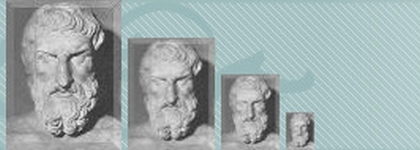
The point is, it simply isn’t good enough to write off the decline of social institutions as ‘changing habits.’ There are fewer and fewer decent places in which to socialise in the real world. In the UK, the only places which are doing well are those that either cater to the very rich or the very poor; high-end restaurants and gastropubs are thriving alongside fried chicken shops and cheap takeaways. Some young people may be content to watch Netflix instead of go to the cinema, or stream music instead of go to a live music venue, but I’m not. The internet is wonderfully convenient, but it doesn’t replace the joys of engaging in sociable activities with others in person. The decline of such places does not bode well for those of us who want our social institutions to thrive alongside the widespread use of technology. Epicurus would have been appalled at how alienating and atomised modern life has become. The solution surely rests in our society rediscovering the simple love of spending a bit of time and money with friends away from home.

Extreme economic concentration creates the conditions ripe for dictatorship.

In fascist regimes the leader seeks alliances with giant corporations, as long as they obey him, and in return they avoid democratic accountability and can continue growing. Maybe you can guess where I might be going with this?

In the last few years the US has virtually ignored the anti-trust laws that helped the country avoid a concentration of economic power. This is not just a Trump phenomenon – it was occurring under Obama, who seemed oblivious to it (or frightened of standing up to it?). I remember being introduced to a neighbour who was a senior staff member of the Justice Department (responsible for mergers and acquisitions). I told him I thought the number of giant mergers of big companies was crazy, damaging and undemocratic. I said I hoped he was busy doing something about it. The withering look he gave me told me everything I needed to know. (Sigh! From my worms-eye view I try to take advantage of opportunities, rare though they are).

We now have monopolies and oligopolies in finance, media, the airlines (Oh, dear!), telecoms, chemicals, hospitals and pharmaceuticals, and, as a result, Government has already, to a degree, lost influence over economic policy. The titans have created stagnant wages, pay little tax, give mind-blowingly dreadful service and lousy value for money. All over the world people feel frustrated and helpless, and not just in the US (Orban in Hungary, Bolsonoro in Brazil, even arguably Brexit, are symptoms of the same problem)

Apparently the US Anti-Merger Act of 1950 is still on the books and hasn’t been repealed. It is ignored by the judges and lawyers. Congress is a pushover, dependent on election money from – guess who?, overwhelmed with lobbyists from the giant companies, blind to the dangers of unaccountable private power.

This is a situation where more people should turn to Epicureanism – how can we have peace of mind and a pleasant life when our democratic rights are stolen from us and when gormless officials, lawyers and congressmen cave with every giant merger?
(Inspired by an article in the New York Times by Ti Wu, author of “The Curse of Bigness: anti-trust in the new Gilded Age”.

A quote that resonates

“Il vecchio mondo sta morendo. Quello nuovo tarda a comparire. E in questo chiaroscuro nascono i mostri.“  Antonio Gramsci

“The old world is dying, and the new world struggles to be born; now is the time of monsters.”

(Thanks to Dan Dolan, a reader of this blog, for this apposite quotation)

Upheaval seems to be the order of the day all over the world. We have seen this before, and the results were horrendous. But we will get through it, and the perpetrators will eventually exit right. Meanwhile, modern followers of Epicurus have to keep the faith and carry the torch as examples to the young: think for yourself, be calm, thoughtful, polite, generous and caring, while rejecting the coarseness and vulgarity that has exploded around us.

A brief rundown on Epicureanism for those new to it

Epicureanism is a system of philosophy based on the teachings of Epicurus, founded around 307 B.C. It teaches that the greatest good is to seek modest pleasures in order to attain a state of tranquillity, freedom from fear (“ataraxia”) and absence from bodily pain (“aponia”). This combination of states is held to constitute happiness in its highest form. Some people consider Epicureanism to be a form of hedonism, but differs in its conception of happiness as the absence of pain, and in its advocacy of a simple life, and its desire to get along amicably with everyone and have many good friends.

Epicurus directed that this state of tranquillity could be obtained through knowledge of the workings of the world and the limiting of desires. Thus, pleasure was to be obtained by knowledge, friendship and living a virtuous and temperate life. He lauded the enjoyment of “simple pleasures”, by which he meant abstaining from bodily desires, such as sex and appetites, verging on Asceticism. He counselled that “a cheerful poverty is an honourable state”.

He argued for moderation in all things, so that when eating, for example, one should not eat too richly, for it could lead to indigestion or the grim realization that one could not afford such delicacies in the future. Likewise, sex could lead to increased lust and dissatisfaction with the sexual partner, and Epicurus himself remained celibate. Even learning, culture and civilization were discouraged, as they could result in disturbing one’s peace of mind, except insofar as knowledge could help rid oneself of religious fears and superstitions, such as the fear of the gods and of death.

Generally speaking, Epicureans shunned politics as having no part in the quest for ataraxia and aponia, and likewise a potential source of unsatisfiable desires and frustration, which was to be avoided.

Like Democritus and Leucippus before him, Epicurus was an atomist, believing that all matter, souls and gods are all comprised of atoms, and even thoughts are merely atoms swerving randomly.

Epicurus was one of the first to develop a notion of justice as a kind of social contract, an agreement “neither to harm nor be harmed”. He argued that laws and punishments in society are important so that individuals can be free to pursue happiness, and a just law is one that contributes to promoting human happiness. In some respects, this was an early contribution to the much later development of Liberalism and of Utilitarianism.

A subsidised CEO takes aim at an impertinent media

Those reporters have such nerve! Last month, a BBC reporter in London asked Jeff Fairburn, the CEO of Britain’s largest homebuilder and the nation’s highest-paid corporate chief exec, about the $98-million “performance” bonus the 52-year-old had pocketed earlier this year. A peeved Fairburn called the reporter’s question “really unfortunate” and abruptly walked out of the TV interview.

Last week, the UK homebuilder Persimmon abruptly fired Fairburn, citing the public outrage over his windfall. Among the reasons for that outrage: the tax pounds that ordinary Brits contributed towards Fairburn’s record bonus. Persimmon’s share price — and the size of Fairburn’s bonus — only started soaring after the government put in place a “help-to-buy” subsidy for homebuyers. About half the homes Persimmon sells take advantage of this subsidy. Lawmakers intended the subsidy, says Labour MP Rachel Reeves, to aid homeowners, “not reward executives with multi-million-pound payouts.”

Entitlement, entitlement. These pampered, greedy CEOs cannot understand why taxpayers shouldn’t subsidise their exclusive lifestyles. After all they have worked for it, haven’t they? Actually, for what it’s worth, my personal experience of dealing with CEOs (I worked for the Confederation of British Industry at one point, and had to attend numerous meetings with the bosses of the largest British companies of the time). I concluded that they were company politicians first and smart businessmen second. The bigger the company the more they were politicos, even presentable actors. Disillusioning. I have remained hostile to these huge incomes ever since.