Air pollution is affecting us all

Air pollution’s human toll:   children born today will have their lives shortened by 20 months on average by the toxic air that is widespread across the globe, with the greatest toll in south Asia, according to a major study. Air pollution contributed to nearly one in every 10 deaths in 2017 – bigger than malaria and road accidents , and comparable to smoking and road accidents, according to the State of Global Air (SOGA) study. There are signs that actions taken by governments are working, including reducing forms of some particulate pollution in the developed world, while China’s levels of air pollution are also starting to fall. The report found ground-level ozone remains a major problem in rich countries, where it is produced by nitrogen oxides and similar pollutants emitted from traffic and industry.  (The Guardian 3 Apr 2019)

One  thing is clear: huge numbers of Americans,  in particular, usually get into their cars and drive  if they want to buy food, go to church,  a meeting, workplace, or anywhere else.   Public transport, even in the capital, caters to a very small subset of people. The oil and the car industries wanted it this way from way back, opposing decent railways and good bus services.  The result is that air quality in the cities is polluted.  In my opinion gas prices  are too low and there is no incentive for people to leave their cars at home (cue for cries of disagreement!).  Where I live, in a big city, the gas price hovers around $3.50, more or less, and is lower than that in country districts.  Notwithstanding the yells of anguish there ought to be a higher tax on fuel to help the fight against the effects of climate change, and to reduce emissions in general, but particularly in the cities.

Walking is an option, and good for you, that is, if you can avoid the heavily trafficked, fume-ridden streets.

That’s the way to do it!

“Joe Biden joked about the controversy that has engulfed his campaign-in-waiting in his first public appearance since several women accused him of touching them inappropriately.

“Biden arrived on stage at the Washington Hilton to address the International Brotherhood of Electrical Workers (IBEW) conference and shook the hand of the union president, Lonnie Stephenson, before giving him a brief hug.

“I want you to know, I had permission to hug Lonnie,” Biden said to laughter from the crowd.”  (Report in The Hill, 6 April)

Coming from Britain,  the first thing that struck me about the United States was, with some great exceptions, the seriousness of people I met. Sweeping generalisation though it may be, I came from a business environment where  jokes and funny remarks started at 8 in the morning and finished when everyone dispersed home, often from the pub.   Employed on customers these jokes and ironic comments were an important part of our business model, as the business school types would call it.

Isn’t it nice to hear Biden make a joke of hugging Mr. Lonnie Stevenson. A joke!  Wow! The constant torrent of political correctness is really getting boring, actually BORING, even to this liberal Epicurean.  Yes, Biden is a touchy-feely guy, but he seems a nice man.  You can criticize some of the decisions he made years ago, or say he is too old to do the job of President vigorously enough.  But to try to get him ruled out of contention for President is taking yourself way, way too seriously.  I recognise that  his actions are paternalistic and make some people  uncomfortable, but he thought at the time they were encouraging and supportive.  He seems to be adjusting to the new paradigm. Lighten up, Ladies!

Where the British went wrong. (a bit long, but something to debate)

We are now well into the third version of the German European empire.  Startling claim?  Only if you haven’t studied history.

German Empire, Mark 1  (if you exclude the medieval “Holy Roman” version):  the strikingly stupid German Kaiser, sitting astride a belligerent Prussian- dominated army and a burgeoning industrial economy,  jealous of the British and French empires, invades France and starts the disastrous First World War.  Millions killed, but Germany is put back into its box after four harrowing years.

German Empire, Mark 2:  Hitler, bent on revenge and a desire to eliminate the despised Soviets and the Jews,  momentarily dominates the whole of Europe to the gates of Moscow.  Even more millions killed, but Germany is put back into its box after  six years harrowing warfare, with the help of the USA, which then becomes the very Great Power that Hitler wanted Germany to be. .

German Empire, Mark 3:  this is a more benign edition of empire.  Put on its feet after 1945 with the benefit of the Marshall Plan, Germany is restored as an industrial power, and, with France as major partner, creates the EU (after some preliminaries like the Iron and Steel Community etc).  As the EU grew in number of members so the principle economic powerhouse of the EU, Germany, became the most powerful single member.

A key moment was the introduction of the Euro, the  first step to total union.  This has allowed Germany to lend to weaker EU members, like Greece, who have  used their loans to buy more and more German goods, getting more indebted and unstable, a sort of not-very-virtuous circle.  It has been in the interests of Germany to encourage expansion of the EU and movement of people to man the factories.  But what has suited Germany, now with an economic empire, has not always suited other member countries.

From a British point of view the Germans, backed by the French, are bossy, bureaucratic and intolerant of compromise.  The EU has protected the peace and has done great things for trade, health safety at work, fairness in business, equal rights,  monopolies  etc. – overall a good record.  But Germany has not listened to the protests about migration and unification and is viewed as having foisted all the things they want onto unwilling satellites (especially, and allegedly, the UK).

The British, on the other hand, have sniffed at the Germans and the French bureaucratics and said “no thank you”  – which is stupid.  I remember someone saying, way back when the UK joined the EU,  “You have to have Britain as a counterweight to Germany, along with experienced and pragmatic  civil servants who can inject simple, common sense into the diktats from Brussels”.

At first this was the case – there were hundreds of high-level, experienced British civil servants in Brussels.  Gradually they retired or withdrew, and the European parliament became splintered .  While this was happening some rah-rah resurrections from the 19th Century Indian Raj, on the right wing, backward- looking wing of the Conservative party, manoeuvred the country into the dire EU-hostile state it is now in.

Britain should be the counter-weight, the down-to-earth organiser, the country with the Common Sense, stopping the expansive ambitions  of Germany .   But no, the Continentals are still regarded by some as pesky foreigners, to be looked at with suspicion and patronised.  Britain has been hands-off.  From the other side the view of Britain from Berlin and Paris probably cannot be put into print.

Some think the EU will collapse anyway and that it is better to leave now rather than suffer a worse fate in the final calamity.  I don’t share this prognosis. Bigness is the world order of the day. Instead of grumbling on the sidelines the British should be in there, making it work, ensuring stability, no more wars.  In two words: “Epicurean moderation”.  We should have had our very best people in Brussels, trying to moderate the actions of Germany, supported the smaller countries, and avoided the drift towards the extreme Right in Eastern Europe.   A huge opportunity, jettisoned in favour of being a  small, alone island, now with few friends.  Historians will have a field day.  And how long will German empire Mark 3 last?  Not long if China and Russia have their way.  We are better together than apart, and will learn that lesson the hard way.

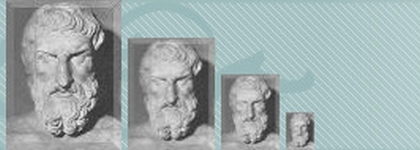
Epicurus believed that a pleasant life, with minimal politics, and plenty of friends, and yes, moderation were the secrets of life. Were he alive today he wouldn’t believe the stupidity (and irresponsibility of the some of) the British.


What you can do to help cut plastic waste

In our personal drive to reduce plastic waste, we should beware easy, but false, solutions:

  •   Cutting out single-use plastic – water bottles, straws, disposable plates and so forth – is a good place to start reducing waste. But make sure you aren’t inadvertently increasing your carbon footprint. A cotton tote bag must be used 131 times before its environmental cost falls below that of a disposable plastic bag, mostly because of the impact of growing cotton. Similarly, you must use a steel water bottle 500 times for its carbon footprint to shrink to less than that of a disposable PET bottle. One undergraduate study found a permanent plastic bottle to result in less carbon emissions than a stainless steel one.
  •  Reducing the packaging you use by buying large containers and, for example, avoiding single-serve yogurt pots, also helps. 
  •  Switch to bar soap. It is a complicated life-cycle analysis, but it tends to have a much lighter footprint than liquid soap from a dispenser.
  • Buying concentrated forms of products such as detergents is also a case of more bang for less packaging. Life-cycle comparisons show they reduce other environmental impacts, to
  • Boycotting mixed packaging, which often can’t be recycled, may also help: for instance, crisp bags and stand-alone pouches that are all the rage for baby food. 
  • Avoid black plastic food trays, whose colouring confuses the infrared detectors used to distinguish plastics in most recycling plants. Go for brands that have made meaningful packaging changes, such as the few drinks companies using 100 per cent recycled PET.
  • Taking any recyclable waste home with you helps if, as in the UK, kerbside recycling is much easier and cheaper for local authorities. If you tip it into a public bin, it’s unlikely that anyone will take the time to separate it out for recycling. (New Scientist May 19, 2018)