Geography teachers do deal with population

From Tony Dale, Oxford, UK, in reply to a letter in New Scientist dated May 25

Contrary to what Graham Lawton seems to suggest, population isn’t a fringe or a taboo issue, at least not in schools in England. Geography deals with it in depth. It is discussed as “population change” rather than “population growth”. Students examine various models for predicting future population change and factors which may influence it.

Students are left in no doubt that high fertility rates in some regions, and rises in others with already substantial populations, will account for a growth in world population to around 10 billion by the mid-century. They are also made aware that improvements in reproductive health and women’s education may well slow down and even reverse that growth by the end of the century. When population does appear on the global policy agenda, there will be many geography students who will ask: what took you so long?

(My take). Ten billion! And already changing climatic conditions are destabilising the Sahel region of Africa and are responsible for an increase in migration north.  This migration can only grow in intensity and is a huge threat to Europe.  We blame corruption and drug gangs for the similar migration north in the Americas, and there is little discussion about the effects of climate change in Central America – but it must be having a disrupting effect, an effect the corrupt leaderships of the countries involved are wholly unable to address.

People seem to think that the climate crisis is just a matter of a few more hurricanes and super-hot summers. The political and economic implications of a heating planet are huge – and instead of proposing a family planning blitz and cutting harmful emissions we shrug our shoulders and invoke personal freedom. Meanwhile we elect clowns because they tell us the crisis is bogus – and it suits us globally to believe them.

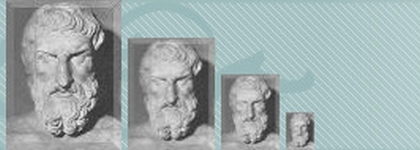
We need more Epicurean pragmatists, not effete politicians looking over their shoulders at their religious constituency. Established religion has no useful role in this crisis , except as an emotional palliative.

Is organic food really better for you?

If you know where to look in academic journals, it turns out there is indeed lots of good evidence to suggest that some organically grown crops can be higher in certain vitamins and minerals. The tricky thing is, there are also lots of studies that suggest the exact opposite is the case. The more you delve into the literature, the more confused and conflicted the answer to what seems like a simple question appears to be. There is very good reason for this.

Imagine you are a scientist trying to solve this conundrum. You might, for example, buy a range of fruit and vegetables, grown both organically and conventionally, then test these crops for nutrient content and compare the results. After all, this kind of like-for-like comparison most realistically reflects the choices available to consumers, right? But here is the problem: this isn’t a like-for-like comparison at all. The crop varieties grown by organic farmers are often not the same as those grown by conventional ones. As genetics tends to be the principal factor that determines the chemical make-up of a crop, the unique DNA of one variety can result in a very different nutrient profile to another, even if they are grown under the exact same conditions. One head of lettuce might look and taste nearly identical to another variety grown next to it,  but their level of nutrients , like vitamin A can vary 20-fold.

The organic and conventional crops on your supermarket shelves will probably differ in other important ways, too. They are often grown in very different climates, even continents, with distinct soil chemistry, irrigation levels, ambient temperatures and sunlight exposure, all of which have been shown to dramatically affect the nutrient composition of crops. Studies have demonstrated that this can vary in the same plant – with two apples from the same tree having different levels of nutrient – even on two sides of the same fruit.

All this is before we get on to how the storage, transport and display of crops can affect their nutrient levels. For instance, we know that simply being exposed to the fluorescent lights of supermarkets can result in a crop of spinach being similar to a crop stored in darkness. This is because even once harvested, the fresh fruit and vegetables are still alive and so constantly react to their environment,  like plants in a field. This creates a hugely complex set of variables that it is almost impossible to control for.

There are many reasons why you might wish to go organic. But given the complicated and often contradictory nature of the evidence so far, it is impossible to claim that organically grown fruit and vegetables are automatically a nutritionally superior choice without cherry-picking studies (or parts of studies) that support this narrative, while ignoring evidence to the contrary. (by James Wongbotanist and science writer, in the New Scientist, 6 July 2019)

Scientists fired from Environmental Protection Agency

Trump has told all agencies to cut at least a third of their advisory committees by September, thus  weakening the science-based regulations process that the administration has pushed back against since Trump took office. 462 committees are potentially on the chopping block, excluding agencies that are mandated by law.  The exclusion of scientists from health matters is particularly troublesome – the civil servants are generally good and conscientious people, but they don’t necessarily have the needed technical medical expertise.

The inclusion of scientists in land management issues, for instance, is a way to bring in local voices, as well as industry leaders, to discuss how best to manage public lands.  It is also a transparent way get scientific input.  But the Administration has spent two years neglecting and undermining the advisory network, and are now trying to use that neglect as a justification for removing these very advisory boards for “not being useful.”

The Trump administration in recent years has shuffled career scientists out of their positions, put limits on which science experts are qualified to sit on advisory boards and created a special White House panel that’s designed in part to counter the science linking climate change to national security threats.

Where does this extreme dislike (fear?) of science and scientists come from?  Some of it must be suspicion of the mysterious and unknown.  The Republicans are now the party of the proudly and fundamentally ignorant; generally coming out of school with no science at all, wary of scientists who use technical (elitist?) words, and lacking  the vocabulary to learn about or discuss science even if they wanted to.  This is the inevitable outcome when education has withered, as funding has been cut, and good, broad  education has become something that only the rich can afford.

Without science and the scientific method we would still be digging turnips, riding horses, and strapping swords to our belts when we go out.

Comedians as presidents

“Jesters and satirists have always been valued for speaking truth to power. But now they’re winning office themselves. When comedian Beppe Grillo joked his way into Italian politics a decade ago, he seemed a one-off. Turns out, he was a “harbinger of things to come”. Since then, Tiririca – an actual clown – has become a congressman in Brazil (“It can’t get any worse”, was his campaign slogan); the comic actor Jimmy Morales is president of Guatemala; and comedian Volodymyr Zelensky, who played a president in a TV comedy, has just become Ukraine’s president. What’s going on?

“The rise of the comedian-politician is partly due to the fall – in the online era – of the barriers to entering politics: instead of holding rallies and pressing the flesh, Zelensky was able to broadcast his message with stand-up routines and the social media. But it’s also a symptom of voter disillusion with mainstream politicians: seeing an outsider mock the political elite is one sure benefit they can get from politics. Electorates “that look to their politicians for entertainment are living through humourless times”. (Jenny Lee,  Financial Times,  25 May 2019)

She left out, maybe because it is glaringly obvious, Trump in the US and Boris Johnson in the UK, both of them popular with a certain segment of the electorate who seek superficial entertainment from the serious business of actually running a country.  Not only are these joker-politicians iconoclasts, supposedly “strong” and “telling it how it is”, but they know how to use the media and play to the gallery, with the collusion of the printed and broadcast Press (Trump-hostile CNN advertises Trump on a minute-by-minute basis).  Not for any of these people the gritty business of reading long, involved briefs and using experts for advice. They use instinct and the lowest common denominator, with a sharp eye on the polls and trending ephemera on social media.  Nothing is serious, at least until they start trade and real wars.

One is reminded of the latter days of the Roman empire, when the mob required bread and circuses and emperors came and went, occasionally three in one year, never mind the barbarians at the frontier.  At this distance we can see that the Roman empire was dysfunctional and was in decline.  Well, the modern jokers are signaling  to us all – it’s deja vue all over again.  If this new crop of “leaders” don’t produce utter chaos, the climate crisis will, in any case.


The allure of handwriting

“We are more than ever obsessed with individual identity, our personal brand, putting our stamp on the world. But we bow to the plain text of the smartphone, bland and unblotted. A WhatsApp message will never have the personality of a sibling’s spider-scribble. Digital communication can never match the intimacy of a handwritten letter. If you want to tell someone I love you, I miss you, I’m sorry, I’m thinking of you, do it by hand, sealed in an envelope. Embarrassed teenagers confessing to a crush now do it by Snapchat. A few seconds and the message vanishes. Blushes are spared, but so much else is lost.”.    (Laura Freeman in The Daily Telegraph)

I can never forget the endless battles as a child between my parents and myself about thank-you letters, in particular: Grumble , grumble, grumble….why can’t I just phone them?  I can’t think what to say……we are not going out until you have thanked Aunt Agatha…….those were the days of courtesy and received manners, and woe betide you if you didn’t write promptly.  Nowadays, one can adopt the principle that those who send you emails get emails in return; and those people, diminishing in number, who typically still hand-write their thanks get hand-written letters. I think the latter are so nice, and seem somehow more heartfelt and genuine than a dashed-off email. They actually  take little more time, and, as for actual content, well, this is an opportunity to charm and be a bit creative.  For that you need more than simply the ability to do joined up handwriting.

Are parents still patiently insisting that their children say “please” and “thank-you” and write thank- you letters?  Are they teaching consideration and courtesy? Some definitely are, and it is much appreciated.  It is also Epicurean.